About The Founder
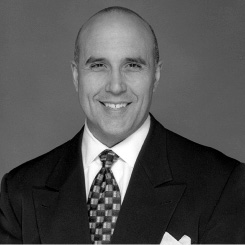
Frank Rodino is founder and president of Churchill Communications. A clinician and healthcare communications innovator, Frank lectures frequently on topics relating to healthcare publishing and outcomes research.
Before establishing Churchill Communications, Frank practiced as a physician assistant with a New York-area health maintenance organization. While in practice he recognized the need for clinically-relevant, unbiased information about newly-approved therapies. Soon afterwards, he founded Churchill Communications with the goal of producing high-quality scientific content that was balanced and relevant to the practicing clinician.
Frank earned a B.S. in physician assistant education and an M.H.S. in Health Care Administration from Stony Brook University's School of Health Technology and Management where he has served as full-time and adjunct faculty. While practicing in a New York-area HMO, Frank served as a medical officer in the United States Coast Guard. He served as president of the New York State Society of Physician Assistants in 1983, and in 1997, Stony Brook University's School of Health Technology and Management honored Frank as a "distinguished alumnus."
Frank is a member of the International Society of Medical Publishing Professionals, the International Society of Pharmacoeconomics and Outcomes Research, the American Medical Writers Association, and numerous professional healthcare societies.
Perspectives
CloseWhat motivated you to establish Churchill Communications in 1989?
The founding partners were all healthcare providers and former academic faculty members. We were frustrated with the quality of the sponsored scientific information that was out there. Much of it was biased and not relevant to our clinical practices. It simply wasn’t helping any of us to deliver better care. We knew we could do a better job so we started the company with the goal of producing high quality scientific content that was balanced and relevant to the practicing clinician. We’ve done our best to remain true to our original mission.
To what do you attribute Churchill Communications' longevity?
Clinical relevance, content expertise, and professional trust have been the winning combination for us over the years. First, we have stuck to our original mission of producing high quality scientific content that is balanced and relevant to the practicing clinician. Second, we will immerse ourselves in a disease category and strive to become content experts in its pathology, providers, patients, and therapies. Finally, as clinicians, it’s easier for us to establish professional trust with key opinion leaders, some of whom we have worked with during our time in clinical practice.
How has the industry changed over the past 20 years and where do you see it going?
The industry is much more heavily regulated and technology has revolutionized everything. The past emphasized the prescriber, but the future is all about partnering with and empowering patients. Patients want and deserve a greater say in the care that they receive. They can access medical information as easily and quickly as clinicians can. They are more savvy about healthcare, but they still need help to interpret medical information and understand how it relates to them. Future therapies will need to be tailored to individual patient needs. Industry must change the way in which it conducts trials and publishes results. The concept of clinical relevance now applies to the individual patient.
What would you consider to be Churchill Communications’ greatest strength?
We’re clinicians first, communicators second. We view things from the perspective of the audience we’re trying to reach, and that’s important. A good clinician will immerse himself or herself in the issues surrounding their patients. It’s more than just a specific diagnosis or treatment. It’s about understanding the impact that the disease is having on the patient’s life and the lives of those around them. Without that understanding, your plan of action is less likely to succeed. We try to be just as thorough. We explore issues beyond the basics of efficacy and safety to educate providers about the patients and clinical scenarios most likely to benefit from a new therapy.
What can a client expect if they hire Churchill Communications?
You can expect a team of content experts from Churchill Communications, many of whom have worked together for more than 20 years. Our scientific directors understand more than just the disease and its treatment. We’re clinicians as well and we understand the dynamics of how care is delivered and what issues are important to the prescriber and the patient. That said, being a content expert is just one part of the puzzle. Our senior publications staff members are experienced, certified medical publication professionals who understand the publishing process and take transparency and compliance issues very seriously. This combination of qualities helps to make us a resource that out clients can rely upon.